
Your Piano - Your Music - Your Way
How to Become a Piano Tuner
Who am I and Why this Article?
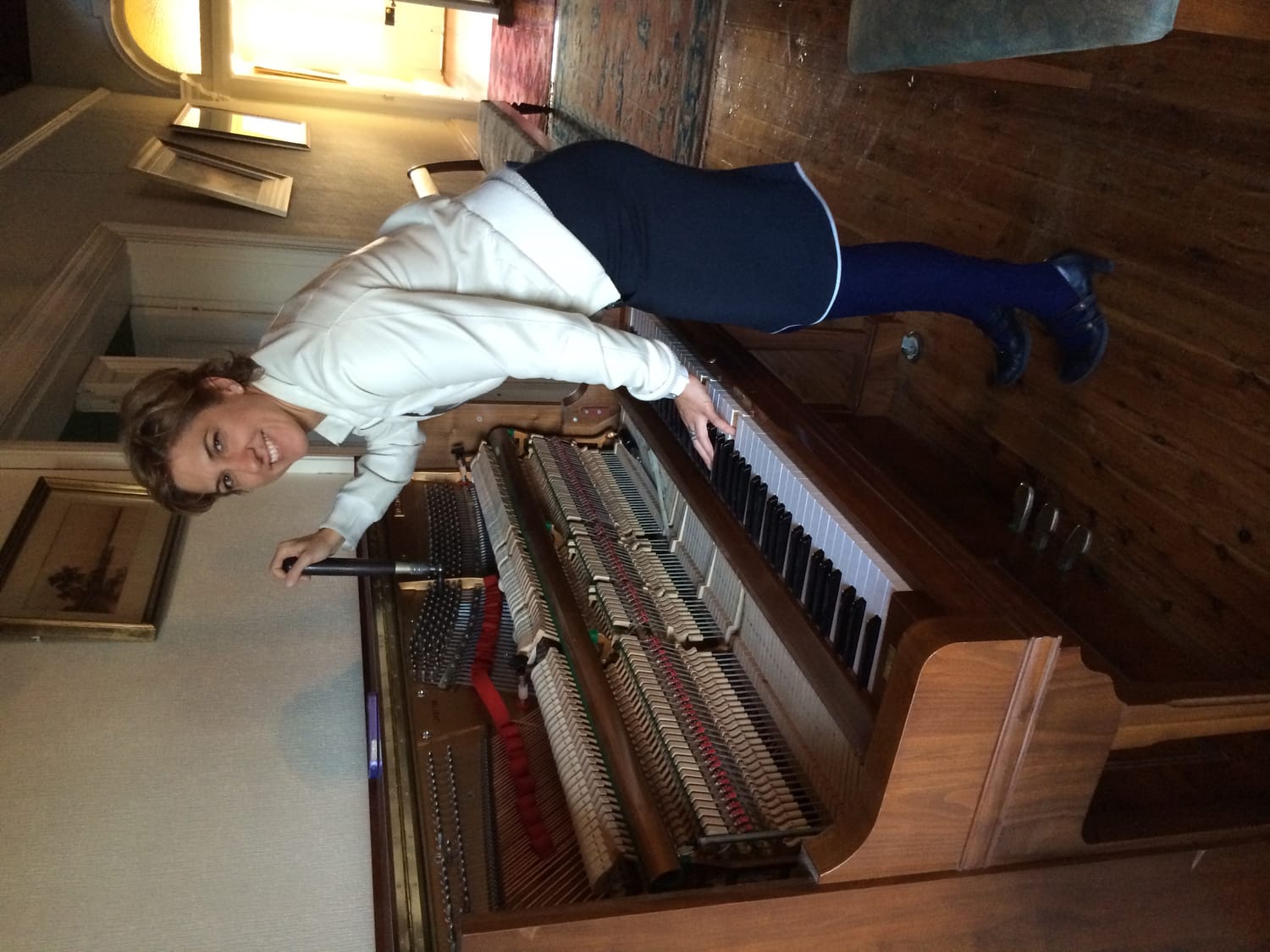
My name is Nada Jasz. I've been a Professional Piano Tuner and Technician for over 30 years.
This article's for people who have an interest in being a piano tuner.
If that's you, here's my (very personal) take on it and some tips and recommendations for you.
Background:
Being a piano tuner & technician is so much more than a job to me. When I think about my own career, it’s been like a climb of Mount Everest that I wasn't prepared for. It’s had exhilarating and magical moments, but also some periods of madness and “Why am I doing this? What was I thinking?”.
I believe if you really want to be a piano tuner, there'll be no stopping you. You'll become a part of a very small club of people with an unusual career experience. You'll live all of its ups and downs and complexities. Here are some things I wish I'd known and my answers to the most common questions people ask.
I've also put in some prompts for self-reflection to guide you.
Question 1: What does a piano tuner do?
Piano Tuner only:
-adjusting over 200 strings in a piano in a reasonable timeframe that’s acceptable to the customer and that will be economically viable for you.
-driving to and from jobs
-running your own small business including admin, taking bookings, marketing, tax, insurances etc.
If you only learn how to tune pianos, your career is limited…What happens when a piano key is not working, or a pedal is stuck or squeaking?
If you become a Piano Technician as well as a Tuner, you’ll also be doing repairs, making adjustments to the mechanism in the piano (regulation). You’ll probably also be cleaning the inside and explaining to customers what the piano needs and why. You might do inspections, condition reports and valuations. All of this requires learning about the mechanism (the action) and understanding how it works. Most of the adjustments you'll be making, you'll be doing 88 times (it's repetitive). It helps if you’re curious by nature. You’ll need specialist tools as well. If you decide to do restoration work, you’ll also need dedicated space to work on pianos and keep your tools and materials.

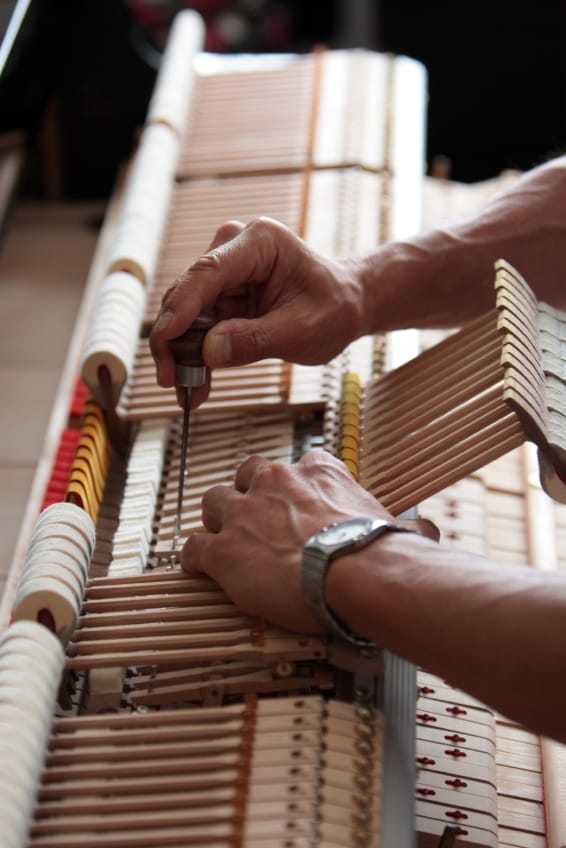
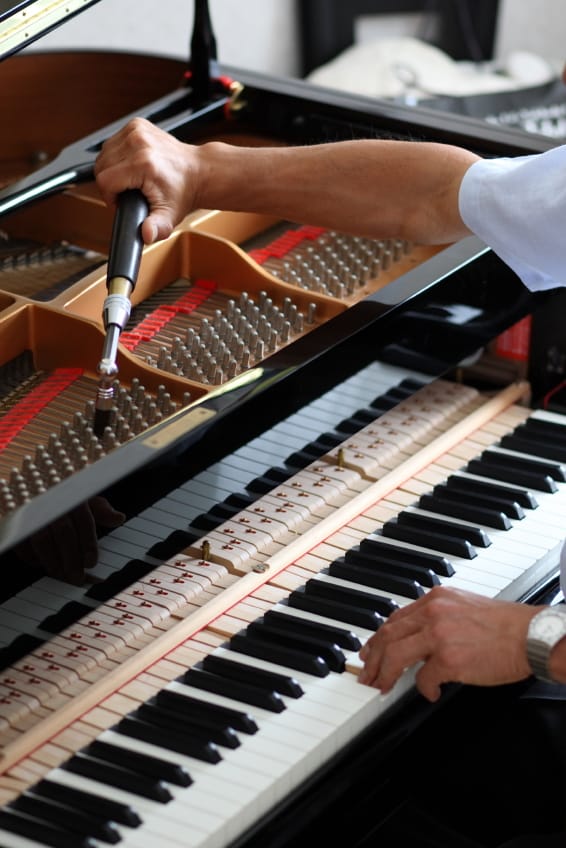
Things about piano tuning that surprised me: The physical element of “setting the tuning pin” was a difficult skill to learn and I was surprised by the amount of physical force required to just move one. It takes a focused practice to develop "good hammer technique" and every piano is different. Having a "good ear" is not enough.
Tuning a piano is repetitive in physical movements. Being conscious of your own body mechanics and having breaks is important. RSI is a real danger for piano tuners if you don’t use your body well.
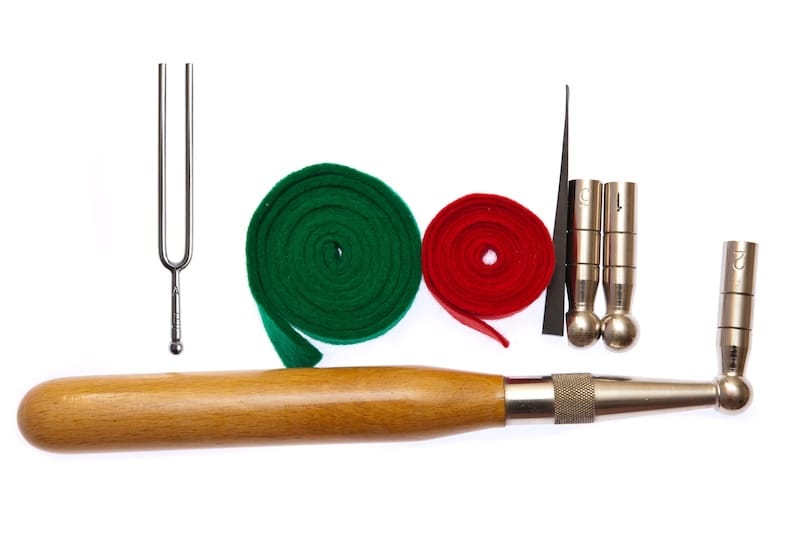
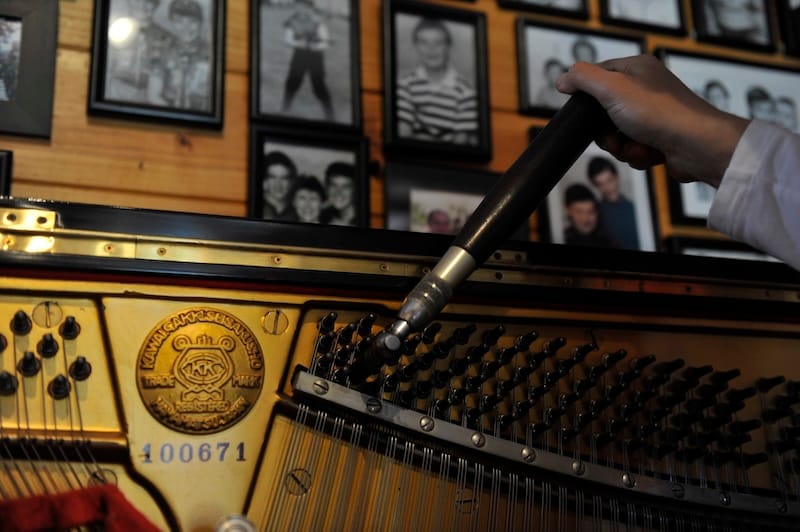
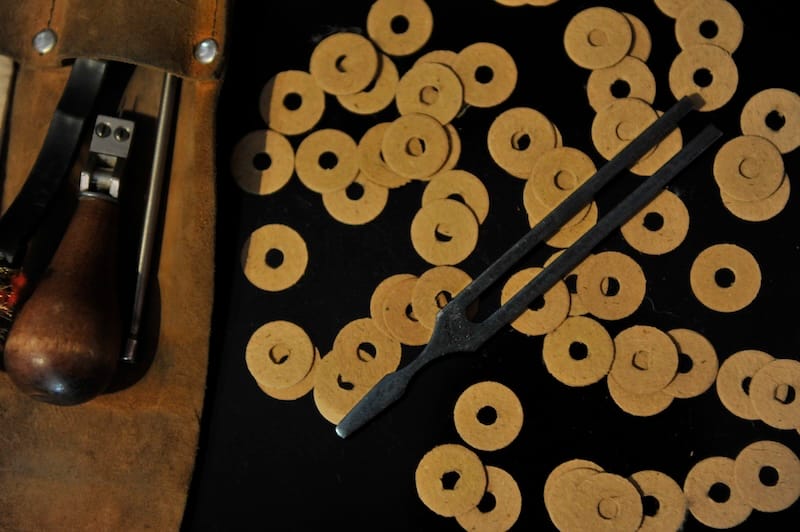
Recommended Activity: before you really decide you want to tune pianos, get yourself a tuning hammer/ lever and a wedge and just feel what it’s like to strike a piano key and simultaneously adjust the string with the tuning pin.
Why it worked for me: I loved the physicality of hitting the keys and feeling the vibrations of the strings and the satisfaction of adjusting them to sound better. Tuning by ear is like working out a big puzzle and I enjoyed the challenge of it. The puzzle is not the same every time… every piano is different
Question 2: How long does it take to become a piano tuner?
My answer: How good do you want to be?
Personal Experience: Adjusting over 200 strings in an hour – it took me over 4 years of tuning almost every workday to be able to complete a good piano tuning in one hour. I learned to tune by ear (no electronic assistance). Sometimes I still struggle to complete a tuning in an hour after a 30 year career. Maybe I was slow, or just incredibly fussy, but I think this is one of the qualities that makes me good at what I do.
Reflection question for you: In your opinion, what makes a good piano tuner?
Question 3: Can you make a living as a piano tuner?
Yes, you can if you learn the skills and practice them consistently and you can run your own piano tuning small business.
Question 4: How do piano tuners find clients?
A good website, Google, word of mouth, musical communities, Social media recommendations (word of mouth using social platforms) Advertising. By doing a good job with the clients you have.
Note: You'll need a lot of clients for a full-time piano tuning business. Although pianos should be tuned once a year, it's a service that can easily be delayed or forgotten.
Question 5: Is piano tuning a good career?
Yes -If you're suited to it and if you have strong enough reasons to make it work.
Why it worked for me: I liked the physicality of tuning. There was always something new to learn because every piano is different and pianos are complex. I enjoyed going to new places and meeting new people. I liked where I was working and driving in a city I loved. Personally I found elements of running my own business difficult and not fun, but I like the freedom of it.
I had some really big reasons or “Why’s”
I love music (almost obsessively – it’s my life). I really like musicians – they're my people and I like to make their life better. I love a challenge, and I like the variety of new problems to solve in pianos. I like making things as good as they possibly can be (a bit of a perfectionist, a bit OCD).
30 years ago, I had very limited alternative career options that appealed to me. (It was before the internet - I didn't even know what was out there). It was also a time when people stuck to one career. I had to make it work.
Reflection question: Why do you want to be a piano tuner?
Question 6: Is Piano Tuning hard to learn?
Personal Experience:Piano Tuning is the hardest thing I've ever learned.
Question 7: Is there a shortage of piano tuners?
This is a location dependant question. In my part of the world, the current reality doesn't match with media reports of a shortage of piano tuners. Piano tuning is rarely an "urgent" service, but client expectations of almost instant gratification for most things creates a perception of scarcity if they can't find or book a tuner immediately.
Question 8: How do I learn piano tuning?
Paid Piano Tuning Courses, Online video tutorials, Books for the theory. Personal tuition (apprenticeship type arrangement). Mentorship. Practicing it regularly. It will mostly be a self-guided process unless you do a paid course.
Paid courses were not available at the time I learned to tune. I was very fortunate to have good mentors in the trade. Piano tuning apprenticeships are difficult for small business to support. There's a high drop-out rate of people who start learning to tune pianos.
Tips: Try to learn and practice piano tuning as much as you can on your own piano before approaching a professional technician for advice. If you can formulate specific questions to ask, it shows you have genuine interest and you may find a Mentor.
When you're ready to make a firm commitment and a significant financial investment, I recommend Reyburn Cybertune software. I wish this was around when I was learning to tune. It can be used as a visual guide to complete piano tunings, but it's also the best thing if you're learning to tune by ear. It will measure your aural tuning and recommend what areas to focus on to improve it.

Your Piano- Your Music
Your Way




Created with systeme.io